
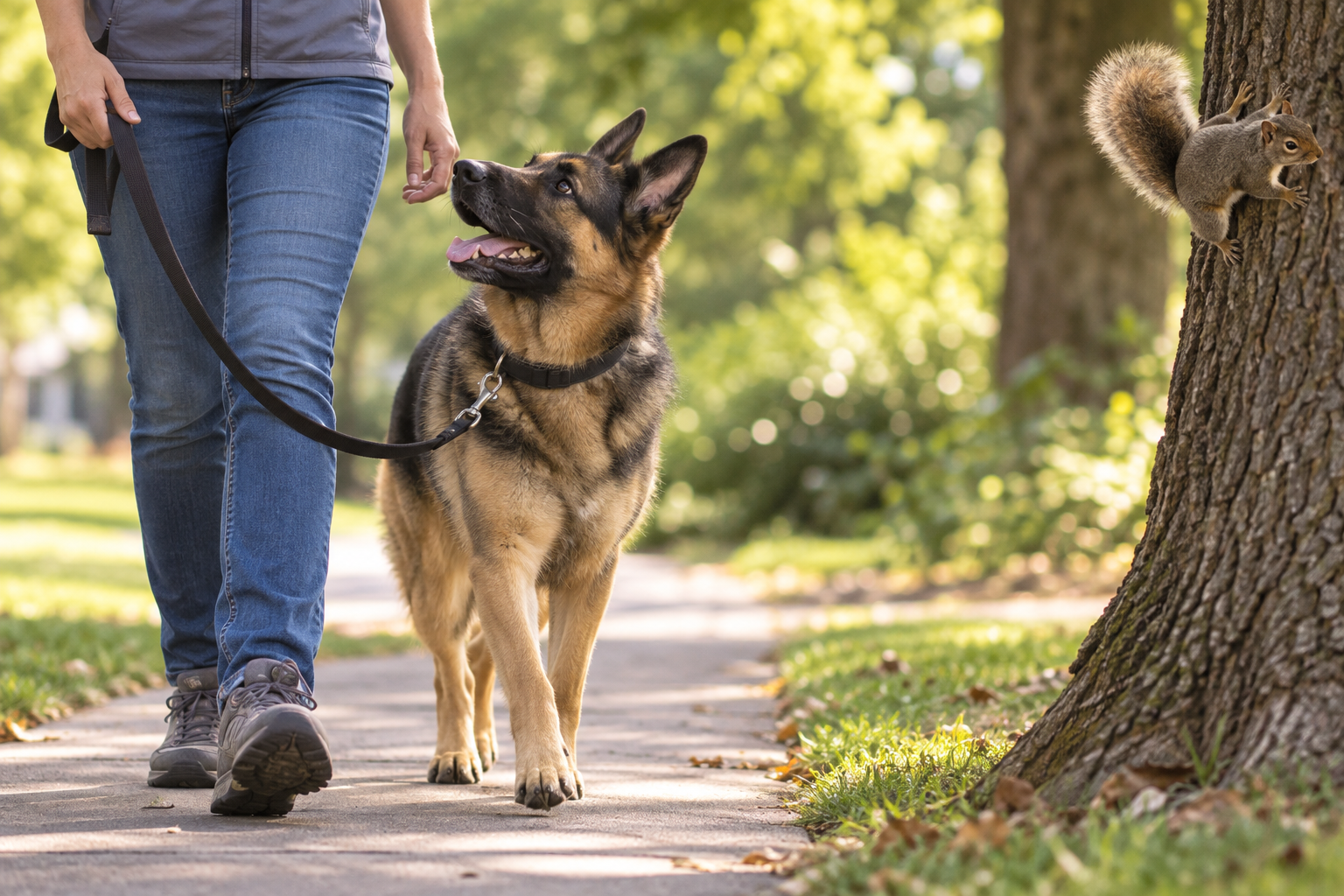
If your dog is constantly pulling you down the street, you're not really taking your dog for a walk—your dog is taking you for one!
The good news is that leash manners can be taught. The key is getting your dog's attention and teaching them that staying connected to you is rewarding.
With patience, consistency, and practice, you can help your dog learn to walk with you instead of dragging you along.
1. Get Your Dog's Attention First
Before working on leash manners, teach your dog to pay attention to you.
Choose a simple verbal focus cue. When your dog looks up at you in response, reward that attention immediately with something they enjoy.
Small training treats work well for many dogs. If your dog is more motivated by toys, a favorite toy or a brief play session may be a better reward.
The goal is to teach your dog that paying attention to you is worthwhile.
2. Reward Walking Together
Once your dog understands your focus cue, begin practicing while walking with your dog on a leash.
Encourage your dog to stay beside you, pay attention, and match your pace. Reward the behavior you want to see.
Start somewhere with few distractions, and keep your expectations realistic. You're building a new habit, and that takes repetition.
If your dog loses focus, try changing direction to encourage them to reconnect with you. When your dog turns their attention back to you, reward that response.
Remember: reward the walking behavior you want rather than waiting until the walk becomes a tug-of-war.
3. Practice Stopping Together
A walk includes stops as well as movement.
Periodically stop and ask your dog to sit. Reward your dog for stopping with you, sitting, and giving you their attention.
This helps reinforce the idea that your dog should pay attention to your movements rather than continuing to pull forward whenever you stop.
4. Help Your Dog Handle Distractions
Squirrels, interesting smells, other dogs, and unexpected noises can all compete for your dog's attention.
When your dog becomes mildly distracted, try your focus cue and reward them for reconnecting with you.
You can also teach cues such as “leave it” to help your dog redirect attention away from something you don't want them pursuing.
If your dog is too distracted to respond, create more distance from the distraction or move to a quieter area before continuing your practice.
The goal isn't to eliminate your dog's curiosity. It's to teach your dog how to disengage from distractions and respond to you.
5. Practice, Practice, Practice
Good leash manners don't develop in a single walk.
Keep training sessions short and positive. Begin in a relatively quiet environment, then gradually introduce more distractions as your dog improves.
Be consistent with your cues, reward the behavior you want, and give your dog time to learn.
Every dog is an individual. Progress may be gradual, but regular practice helps you build the communication and attention needed for more enjoyable walks.
A Good Walk Is About Learning to Walk Together
Leash training isn't simply about controlling where your dog goes. It's about teaching your dog to pay attention, respond to you, and move with you.
The more you practice together, the more natural good leash manners can become. 🐾
Want a More Detailed Training Plan?
The principles in this article are a starting point. For owners who want a more structured approach, our planned Loose-Leash Walking Success Guide will build on these basics with a step-by-step practice system, training exercises, and help working through common challenges.
Watch for it from Canine On It!
About the Author
Glenna has hands-on experience training German Shepherds in Schutzhund, earning working titles under the original Schutzhund I, II and III system. A puppy from one of her working German Shepherds also won the 9–12 month Senior Puppy class at the U.S. Sieger Show, where dogs are evaluated by German judges brought to the United States to officiate.
